
Harmony on a Plate: Vietnamese Flavors by Region
. From the whispering North to the loud and proud Center. Discover how climate, history, and the philosophy of balance shape the soul of Vietnamese flavors and famous cuisine."
FOOD
Hein Lombard
2/4/20267 min read
How Climate, History and Belief Shape What People Eat
Vietnam is shaped in many ways like a long bamboo pole, with a basket at either end (north & south). People describe Vietnam in similar terms as well - the cooler climate, historical northern area and warmer southern area are linked together by a thin strip of land in the middle.
This basic description explains much of the Vietnamese cuisine.
In the North, there are four distinct seasons and cold temperatures during winter months. There is also river fog. In the Center, where the climate is relatively temperate, but the land is very narrow, people experience both strong winds and storms and hot temperatures. In the South, people experience extreme warmth, muddy soil, fruit-bearing trees and an abundance of water. As a result of these environmental differences, over time each section has developed their unique method of preparing food based on their environment, history and culture.
Underlying the cultural and environmental influences is another layer that drives how and why people eat what they do; food is about finding a balance between taste and health, as well as harmony between humans and the world around them.
The Northern Region
Cool seasons, subtle flavors and warm soups.
The North, particularly Hanoi and the Red River delta, has historically been the center of Vietnam's culinary heritage. The Northern climate is similar to that of many Western countries in terms of having four distinct seasons with the added feature of a cooler, wetter winter season compared to its Southern counterpart. As such, for centuries people living in this region have utilized fewer spices and less tropical fruits than those found in the South, which led to the development of their own unique cooking style; a more deliberate, accurate, and conservative approach to preparing meals.
Their style of preparation typically incorporates mild flavors and clean flavors as well. They use a minimal amount of sugar in their cooking and use chili, but do not overuse it. In general, the emphasis is placed on allowing the primary flavor of the ingredients they are using to remain the focus, rather than covering up the flavor with additional seasoning.
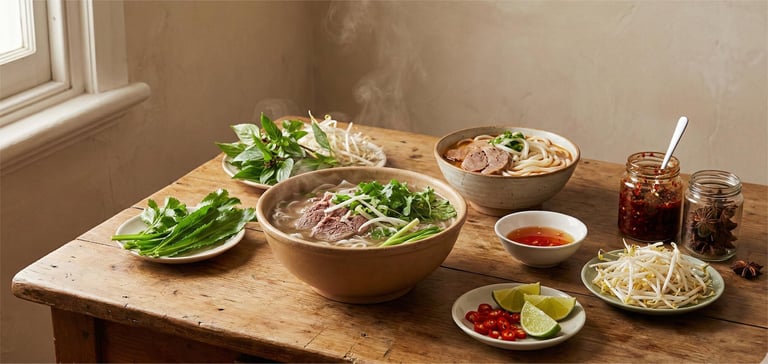
Hanoi, in particular, is the location where the original essence of Pho was born and raised. The Northern-style Pho utilizes a very light, clear broth as its base, created from bones and charred onions and ginger, along with milder spices (star anise and cinnamon) providing subtle support in the background, while the sweetness provided by the broth is derived from the marrow of the bones, and therefore not derived from added sugar. A "classic" Hanoi bowl of Pho is quite minimalist in its presentation, consisting primarily of: Broth, Noodles, Beef, Lime Juice, Vinegar/Garlic, and possibly some thinly sliced pieces of chili pepper.
Additional dishes also demonstrate a similar approach to balance. Bún Chả consists of a combination of cold rice noodles, fresh herbs, and hot charcoal-grilled pork served in a warm, lightly sweet and sour broth. Bún Thang, a dish commonly prepared during the Lunar New Year celebrations, is a visually appealing dish that resembles a flower when viewed in a bowl, featuring fine strips of egg, chicken, sausage, mushrooms, and greenery arranged in separate colored sections on top of a clear broth. Even something as simple as a breakfast meal such as Bánh Cuốn (thin steamed rice rolls filled with pork and mushrooms), demonstrates a delicate and soft nature as opposed to being heavy.
In summary, Northern Vietnamese cuisine can be likened to the weather conditions on a foggy or misty morning in the North; Quiet, layered, and more refined than it initially appears.
The Central Region
Spice, strength and dishes shaped by hardship.
A small band of land located between mountains and water creates the geographical location of the Central Region of Vietnam. During the summer months, temperatures become extremely hot. Floods and storms are an integral part of living in this region. Also, the land here is less fertile then the other two large Delta regions. As such, the people of this area developed foods that are robust, preserved and full of flavor as well as strong.
Many of the commonly used ingredients include chili, fermented sauce, and turmeric. Many of Vietnam's famous fermented shrimp and fish paste products originated in this area. These were originally developed by the people of this region as a way to preserve food during the difficult economic times, but they have since become some of Vietnam's strongest tasting products.
Another aspect of food preparation found in this area is the traditional method of cooking known as "royal" cooking. In Hue (the old Imperial Capital), chefs prepared small, delicate dishes in very small quantities for the Emperor. Each dish was created to be visually pleasing and contained a variety of tastes in a single bite. These types of dishes continue today, with Hue being renowned for its rice cakes and dumplings that are all made to exact specifications and presentation.
One of the most popular soups of the region is Bún Bò Huế. It is similar to Northern Pho, except it has a much stronger broth, using both beef and pork stock, along with lemongrass and a hint of fermented shrimp paste. The chili oil on top of the broth gives it a bright color and appearance, reminiscent of sunshine on a hot day. The thick round noodles found in this soup will hold their shape against the heavy broth, while ingredients like pork knuckle and cubes of congealed blood are common.
Many of the foods of the Center Region tell a story of resourcefulness. Cơm Hến is a combination of rice, small river clams, herbs, peanuts and cracklings, typically served with a side of hot clam broth. This dish originated in small communities that lived along riversides. Mì Quảng is a dish that sits at the border of noodle soup and salad. The amount of broth is minimal, and the noodles are stained yellow by turmeric. The dish contains meat, shrimp, greens, and a crunchy rice cracker.
In contrast to the North whispering, the Center Region is loud and proud. Its foods are hot, yet thoughtful; a product of the fusion of refined royal cuisine, and the necessity to create excitement out of simple ingredients.
The Southern Region
Tropical warmth, sweetness and abundance.
The South continues where the Central Highlands leave off and eventually leads to the Mekong River delta; an extensive network of rivers and farmland that many call Vietnam's "rice bowl." In contrast to the central highlands, there is no actual "winter" season in the South. Instead of the two defined seasons in the North (rainy & dry), there is only what appears to be perpetual growing season for fruit trees, vegetables and rice. This abundance of produce is represented clearly in the food.
Flavor profiles tend to be richer, sweeter and fuller than those found in northern Vietnamese cuisine. Coconut milk, coconut water and palm sugar are frequently used as sweetener in both desserts and savory dishes. Sugar (palm sugar) is also used in braising liquids, soups and as a base for dipping sauces and is then offset by citrus flavors such as lime juice, tamarind paste or fresh herbs.
Hủ Tiếu, the Southern equivalent of Pho, also reflects the cultural melting pot that is the Mekong Delta. Many of its characteristics come from Cambodian cuisine, as well as Chinese traders who traveled throughout Southeast Asia. Noodles are typically slightly chewier, broths have a sweeter flavor profile and the toppings may include ground pork, shrimp, boiled egg, and occasionally dried squid.
Com Tam, or Broken Rice Plate, is a traditional Southern dish that originated from low-quality rice that was only available to farmers. Today, this generous plate is made up of a grilled pork chop, shredded pork rinds, a steamed egg loaf, thinly sliced pickled carrots and daikon radish, scallion oil and a small amount of sweet fish sauce. Com Tam is a simple yet satisfying dish that epitomizes Saigon.
Banh Xeo, the large crispy yellow pancake is filled with ground pork, shrimp and bean sprouts, and while it can be quite rich when fried, it is always served with a mountain of fresh greens. When you tear a piece of the pancake off and wrap it in the greens, you then dip it in your choice of sauce. The combination of hot and cold temperatures, crunch and softness, creaminess and bitterness is experienced in every single bite. A similar experience occurs in Canh Chua, the Sour Fish Soup of the Mekong Delta. While the flavors are different from Banh Xeo, they share similarities. Tamarind provides the acidity in Canh Chua, pineapple and a touch of sugar provide sweetness, and river fish and tender vegetables are cooked together with wild-scented herbs grown in the wet fields surrounding the river delta.
Southern Vietnamese food shares a similar characteristic to the region itself: warm, generous, somewhat boisterous and relaxed, and open to the influence of Khmer, Chinese, French and Thai neighbors.
Closing Thoughts
I've eaten a lot of different foods over the years. While I definitely like some more than others (there are a great deal of foods that I enjoy), that doesn't mean the other foods were as enjoyable or even more enjoyable than the ones I like. It's basically just about personal preference when it comes to liking or disliking certain foods.
It's simple enough to look around and see the most popular foods and the colorful plates at the restaurants. But while that might be fun to look at from the outside, the food we serve is a very quiet process: balancing the warmth of the food with the coolness of the food; balancing the flavors of the food; balancing the colors and textures of the food; balancing the physical needs of the body with the natural rhythms of the seasons; and so on.
The cool north, the hot center, and the big southern region each have their own voice, but they all share the same main message. When you eat a good meal, you need to feel connected to where you are, the experience you had, your family and friends, and most importantly, the time you ate the meal.
To truly understand this place, start by looking at what is in the bowl in front of you. The food will take care of the rest.
© 2025. All rights reserved.
hello@gonomadnest.com