
Vietnam: Then and Now (2018–2026)
A personal look at Vietnam then and now, from 2018 to 2026. Real experiences, daily life, and what travelers should know before you travel.
TRAVEL
Hein Lombard
1/6/20265 min read
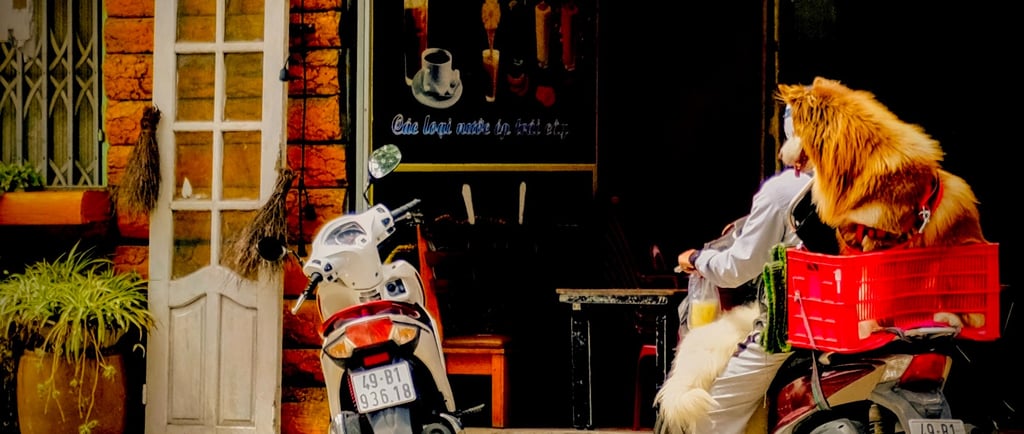
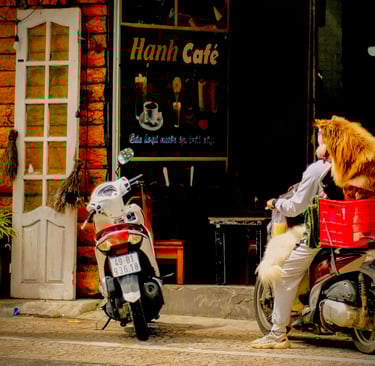
A few things 8 years in Vietnam has taught me.
The first time I crossed into Vietnam, I didn't land at some shiny terminal in Da Nang or Saigon. I literally walked across the Mộc Bài land border in April 2018, dragging my entire life in a suitcase from Cambodia. The heat hit me first. Not just hot, but heavy. A wet blanket that smelled like diesel and middle-of-nowhere countryside. Then, after hours on a bus to Saigon, came the noise. It wasn't just traffic. It was a wall of sound. Horns, shouting vendors, the mechanical whine of a thousand engines, all crashing down on me.
Eight years later, living in the quiet rhythms of Sóc Trăng, I know that initial shock was just the surface. Vietnam overwhelms you before it embraces you. But as we move to 2026, the country is cleaning up its act. The Wild West energy of 2018 is still here, but it's now wrapped in stricter laws, electric taxis, and digital payments.
If you're looking for a checklist, there are plenty of blogs for that. This is about the things that aren't on the list.
Getting Around: From Chaos to "Smart" Chaos
My first time crossing a street in Saigon wasn't a walk. It was a crisis of faith. I stood on the curb, waiting for a gap that never came. Eventually, a local grandmother took pity on me, grabbed my arm, and marched me and my luggage straight into the flood.
In 2018, intent mattered more than rules. In 2026, the rules are catching up.
The 2026 Pedestrian Rule
Under the 2025 traffic laws (Decree 168), you're now officially required to signal with your hand when crossing at spots without traffic lights. Like trying to stop a tidal wave with your palm. But it works. Drivers see the hand, they see the intent, and they flow around you like water. Honestly, It feels a bit absurd, but it makes sense.
Stricter Fines
In 2018, red lights were suggestions. In 2026, they're expensive. Fines for running a red light have jumped to 18 to 20 million VND for cars. You'll notice people actually stopping now.
The Art of the Walk
The secret remains the same: Walk with confidence. Don't run. Don't stop. Motorbike riders are hyper-aware. They'll adjust to go around you. If you freeze, you become unpredictable. That's when accidents happen.
Money: The QR Revolution
Moving from Cambodia's dual-currency dance, the Vietnamese Dong was refreshing. If a bit zero-heavy. You'll withdraw 2 million VND and feel rich until you realize that's about $80 USD.
Cash is King, but QR is Queen
In 2018, I carried a brick of cash everywhere. In 2026, VietQR is everywhere. Even in the deep Mekong Delta, almost every mom-and-pop shop has a QR code on the counter. You can pay for a 15,000 VND coffee by scanning it with your banking app.
The "District 1" Rule
Vietnam is cheap, but location is everything. A coffee in Saigon's District 1 might cost 60,000 VND. Walk ten minutes to a local alley, and it's 18,000 VND.
Don't Panic at the Register
Vendors are generally honest. If the zeros confuse you, just show them your notes. They'll point to what they need. In eight years, I've found people to be helpful, not predatory.
Food & Hygiene: The Salt and the Ice
When I first moved to the Delta, I expected every meal to be a fire-breathing challenge like in Thailand. Instead, I found balance. Vietnamese food isn't about heat. It's about herbs and broth.
The 2026 Trend
You have to try Cà phê muối (Salt Coffee). It's the current obsession across the country, balancing the bitterness of Robusta with a creamy, salted foam.
The "Ice" Safety Check
In 2026, urban ice is mostly safe "factory ice" (cylindrical with a hole). If you're in a rural village and see crushed ice being hacked off a giant block, that still carries the old risks. Stick to the "ice with a hole" and you'll be fine.
The Busy Rule
My golden rule: eat where the locals eat. If a plastic-stool place is packed at lunch, the turnover is high and the ingredients are fresh.
Health: Vulnerability and World-Class Care
You haven't truly experienced vulnerability until you're lying in a hospital bed with four broken ribs from a motorbike accident, trying to explain your pain to a doctor through a translator. I've had my share of drama here. From those ribs to an emergency gallbladder removal. Healthcare in Vietnam is now a mix of local grit and world-class efficiency.
The Medical Hubs
In Sóc Trăng, the doctor-to-population ratio has improved to 15 doctors per 10,000 people. But for anything serious, I go to Cần Thơ. Hoàn Mỹ Cửu Long Hospital is excellent. It's where I had my surgery. Standards are high, even if the language barrier can be tricky.
The Saigon Advantage
For critical care, Saigon is still the peak, with nearly 40 beds per 10,000 people. If you want English-speaking staff and Western standards, look for Vinmec or FV Hospital. It costs more, but for peace of mind, it's worth every Dong.
Tipping: From Confusion to a Smile
When I arrived, tipping simply wasn't a thing. I'd leave change on the table and the waiter would chase me down, thinking I'd forgotten it. In 2026, that's changed. It's still not "mandatory" like in the US, but it's deeply appreciated as the cost of living rises.
Who to Tip
I always tip Grab or Xanh SM (Electric Taxi) drivers who navigate the chaos for me.
My Commute
In the Delta, I mostly use my mountain bike. It's better for the environment and my waistline after all the Bún I eat. When I do take a car, I make sure to tip well.
Language: The Land of Laughter
After eight years, the language is still my biggest downfall. I can order coffee and buy fruit at the market, but I'm far from fluent. But here's the secret: Thailand might be the "Land of Smiles," but Vietnam is the Land of Laughter. When I butcher a tone (and I do, often), the locals don't get offended. They laugh with me, not at me.
Google Translate is your best friend. Don't be ashamed to use it. It's the bridge that makes daily life possible.
The In-Between
Eight years ago, I was a stranger standing on a curb in Saigon, terrified of a scooter flow I didn't understand. Today, as I watch the sunset over the Maspero River, sipping an coffee in Sóc Trăng City, I realize that Vietnam didn't just teach me how to cross a street. It taught me how to live in the in-between.
In 2026, the country is faster, flashier, and more digital than the one I first met at the Mộc Bài border. But the heartbeat remains the same. You don't come here to find a version of the home you left behind. You come here to be challenged by a world that operates on human connection rather than cold efficiency.
Use the QR codes. Follow the new traffic signals. Stay at the international hospitals. But never lose sight of the people behind the progress.
Vietnam isn't a checklist to be completed. It's a rhythm you eventually learn to dance to. Trust the chaos. Respect the change. And most importantly, let this place change you.
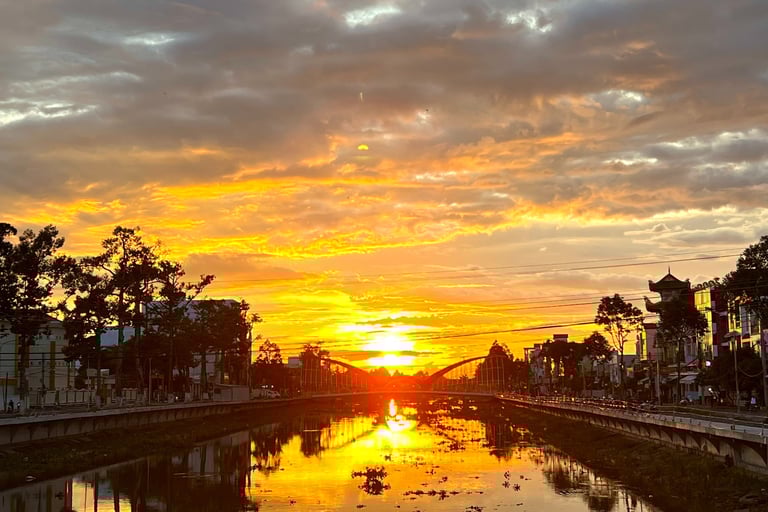
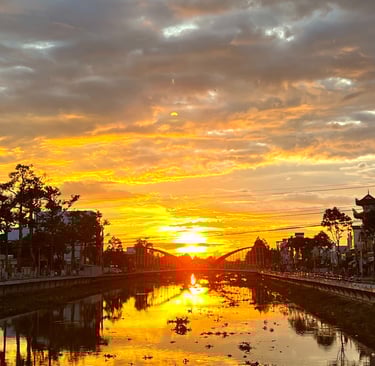
Maspero River, Soc Trang City. Vietnam
© 2025. All rights reserved.
hello@gonomadnest.com