
Vietnam Tết Travel. The Art of Stepping Aside: Why I Leave During Tết - Part 2
Vietnam Tết Travel. Discover why some expats choose to step aside during Vietnam’s largest celebration. Explore the 'Tết Tide' of 2026, the quiet solitude of the islands, and practical tips for navigating the country during the Lunar New Year transition.
TRAVELCULTURE
H Lombard
1/15/20265 min read
The Art of Stepping Aside
I usually fly back to South Africa every second year to see my parents. It’s the longest break I get, long enough to feel like time actually stretches instead of just pausing. Vietnam has public holidays scattered through the calendar, but most of them only allow for short trips, a few days here and there, so one goes somewhere close enough to be back at work by Monday.
Tết is different. It’s the one moment when the country opens up a real space in the year.
I’m one of very few foreigners living in Sóc Trăng, which means my social world is almost entirely Vietnamese. During Tết, those friendships gently close in on themselves. Everyone goes home. Parents, grandparents, uncles, cousins. It’s not a holiday you share casually. It belongs to families.
I give them that space. And I take to the road.
When the Country Starts Moving
A week or two before Tết, you feel the shift. People stop talking about work and start talking about tickets. Conversations drift toward logistics: who’s leaving when, which bus company still has seats, how much the ferry has gone up.
Bus stations begin to swell long before the holiday itself. You can stand at the edge of one and feel the pressure building. You see people carrying massive cardboard boxes wrapped in red plastic twine, stuffed with everything from electric rice cookers to dried squid. These aren't just belongings; they are the physical proof of a year’s worth of work being brought back to the village.
Vietnam doesn’t drift into Tết. It lunges. For those of us trying to go somewhere else, the timing couldn’t be worse. This is when schedules collapse and a six-hour trip becomes twelve. But there’s no avoiding it. If you move at all during Tết, you move inside this tide.
Saigon in the Pause
In Saigon, the effect is strange. The streets are quieter, even during what should be rush hour. Not empty, just… softened. The usual roar of motorbikes dulls to a steady murmur. Whole neighborhoods, the ones usually choked with street food vendors, feel as if someone turned the volume knob down. The metal rolling shutters are pulled tight, some draped with a simple "Closed for Tết" sign on a scrap of cardboard.
You can sense that the real movement has already gone somewhere else. The city hasn’t stopped, it’s simply waiting for everyone to come back.
Choosing the Quiet
There’s a particular moment during Tết when you realize you have to decide. You can stay and accept the crowds, the ceremonies, and the endless cups of tea. You can sit politely on a plastic chair in someone else’s living room and smile through conversations you only half understand, feeling the warmth of their hospitality but also the undeniable weight of your own "otherness."
Or you can leave.
I almost always leave. Not because I don’t like Tết, I do. There’s something deeply moving about watching a whole country turn back toward itself. But it’s also intense. Everyone is inside something together, and I tend to do better just outside the circle, close enough to see it clearly.
So when the migration begins, I move too, just in the opposite direction. While families head toward their home provinces, I look for places that empty out. Small towns where the holiday drains the streets instead of filling them.
Traveling Inside the Tết Tide
No matter where you go in the Mekong, you can’t avoid the river. Buses fill until there’s nowhere left to stand, the aisles packed with small stools for the unlucky ones. Ferry terminals become temporary villages of people sleeping on luggage, eating sticky rice from plastic bags.
You travel alongside people who aren’t going on holiday. They’re going home. There’s a particular energy to that kind of movement. It’s not excited; it’s determined. You can see it in the way children sleep with their heads on their parents’ knees, the way no one complains even when things fall apart.
I always feel like a strange note inside that music. I’m carrying a backpack, not gifts. I’m heading toward silence while everyone else is chasing reunion.
Arriving Outside the Holiday
When you finally step out of it, the contrast is almost physical. The noise drops away. On islands like Côn Đảo, the winds of the East Sea take over. The beaches stretch out in long empty curves, hotels running on skeleton staff, restaurants closed or serving whatever they happened to cook for their own families that morning.
Tết doesn’t disappear here. It’s just muted. There might be a single red banner tied to a fence. A lone altar in a shop doorway with a single plate of boiled chicken and a glass of rice wine left for a wandering ghost.
Being outside Vietnam’s biggest moment gives you a strange clarity. You can see what the country is doing without being swept up inside it. You’re still part of the year, just not standing in the center of the room when it turns.
Watching the Year Turn
Somewhere back in Sóc Trăng, my friends are sitting on woven mats in their family homes. Old stories will be told again. New ones will begin without anyone quite noticing.
I’m not there for that part. Instead, I’m standing in a quieter place, watching a different version of the same moment. A fisherman rinsing his nets. A shopkeeper closing early. Even here, the new year is moving through the air. It just does so gently.
Most of what we carry through life are images and dates. But it’s the texture that fades first, the way a place breathed, the way a season held itself still. Writing it down feels like leaving a small trail back to this moment, just in case.
Vietnam doesn’t rush into a new year. It gathers itself first. It cleans its houses. It feeds its ancestors. It sends everyone home. Only then does it move forward. And watching that from just outside the circle, year after year, I’ve come to understand something simple:
Sometimes the best way to be part of a place is not to stand at the center of its celebrations, but to know exactly when to step aside and let them unfold.
The Traveler’s Survival Guide to the Tết Tide
Navigating Vietnam during the lunar transition requires moving with the current, not against it. If you choose to leave the center of the circle, keep these practicalities in mind:
The Do’s
Book Your Return Early: The migration back to cities after the holiday is even more concentrated. Secure your return tickets at least two weeks in advance.
Carry Cash: While things pause, the informal economy of snacks at terminals thrives. Small bills are essential.
Embrace the "Stool Life": If you end up on a long-distance bus, be prepared for the aisle to be filled with plastic stools. It is standard holiday practice.
The Don’ts
Don't Rely on "Western" Schedules: A six-hour trip can easily become twelve. Do not book tight connections.
Don't Overpack: Space is a luxury. A single, manageable backpack is your best tool for mobility in crowded terminals.
Don't Negotiate Aggressively: Prices for transport naturally rise. Acknowledge the extra labor the staff is performing during their holiday.
Don't Resist the Silence: If you arrive and find shops closed, remember that you chose the quiet. Let the stillness happen.
Missed the beginning? Read Part 1: The Year That Hasn't Started Yet for a look at the economic coiling and the Fire Horse energy of the Delta.
About the Author
Hein Lombard is a South African writer and educator currently living in Sóc Trăng, Vietnam. Nestled in the heart of the Mekong Delta, he spends the "gap months" between calendars observing the intersection of tradition and modern life. When he isn’t teaching or navigating the "Tết Tide," he is likely exploring the Delta’s back roads or heading toward the quiet coastlines of the East Sea.
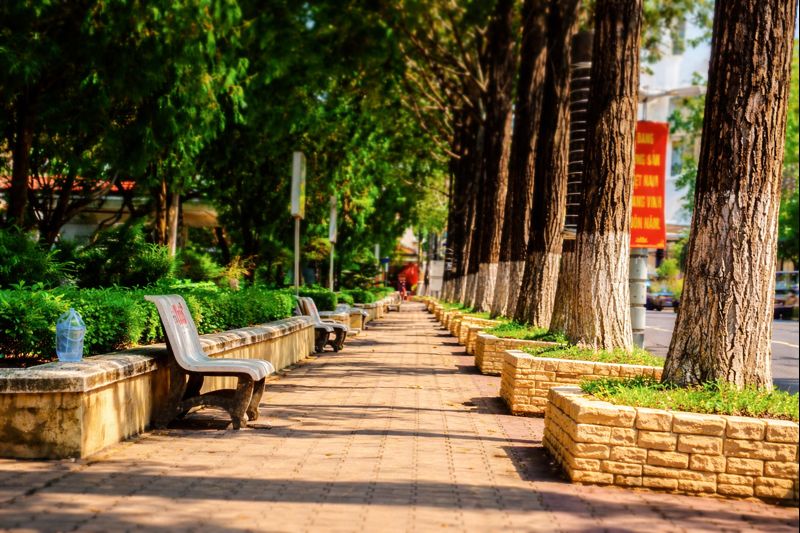
Vietnam-Tet-2026-Quiet-Streets
A visual representation of the "quiet" found in Vietnam during Tết. This image captures the empty spaces and contemplative atmosphere described in "The Art of Stepping Aside," contrasting the national holiday rush with a moment of personal solitude.
© 2025. All rights reserved.
hello@gonomadnest.com