
Vietnam Photography. Photographing Vietnam Through Its Regions and Seasons
Vietnam photography. A reflective photography essay on how Vietnam’s regions and seasons shape light, movement, and everyday life, and how photographers learn to work with them.
TRAVEL PHOTOGRAPHY
Hein Lombard
1/11/20263 min read
Photographing Vietnam: Regions and Seasons
I learned fairly quickly that Vietnam doesn’t offer a single “best time” to photograph it. The country stretches far enough north to south that weather at one end often has little to do with the other. That sounds obvious until you try to plan around it and realize there is no universal window—only different conditions, each shaping what can be seen and how people move through their days.
The North: Subtropical Mist and Winter Light
The north has a winter. Not severe, but enough to change everything. From December into early spring, mist settles into valleys and streets, softening the light and dulling color. Visibility drops. Hills recede into silhouettes. Against this muted backdrop, small details carry more weight: a red scarf, patterned fabric, a flame glowing inside a doorway. Daily life tightens. Markets shrink under tarps, errands are done quickly, and evenings draw people indoors toward warmth. The streets don’t disappear, but they slow, and the photographs that emerge are quieter for it.
By summer the north shifts again. Heat builds, clouds stack high through the morning, and rain breaks the afternoons open. The light turns harsh at midday, then dramatic at the edges of storms. Autumn brings clarity—crisper air, layered distance, golden light—but also crowds, which change how freely you can work. Even ideal conditions come with trade-offs.
Central Vietnam: The Rhythm of Adjustment
Central Vietnam is harder to read. Weather patterns gather along the coast and arrive late. While other regions begin to dry out, the center enters months of rain. Streets flood and reflect the sky. Movement pauses, then resumes all at once. Vendors retreat under eaves, ponchos appear, and the rhythm of the street reorganizes itself around shelter. When the rain lifts, it often does so briefly, sending a surge of light through soaked streets before the next wave arrives. What stands out isn’t the drama of the weather so much as the readiness of people to adapt—constantly adjusting, constantly resuming.
During the dry months the light here turns hard and bleaching, pushing activity into early mornings and evenings. Midday empties out. Color remains vivid, but contrast is unforgiving. Timing matters more than location.
The South: Tropical Motion and the Monsoon
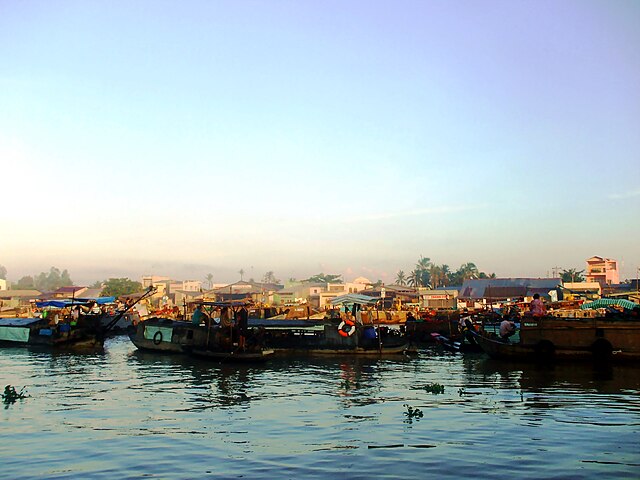
The south moves to a different rhythm. There is no winter, only shifts between dry and wet. Heat stays constant. Rain comes suddenly and leaves just as fast. Life continues through it. Markets steam, motorbikes weave, conversations spill outward. The hour after rain is often the clearest of the day, the air scrubbed clean, the streets glowing. In the Mekong Delta, seasonal flooding arrives predictably and life adjusts around it. Nothing really stops; it only reroutes.
The Human Element: Reading the Patterns
Over time, these patterns show up less as scenery and more as behavior. Winter in the north draws people inward. The center lives in a state of adjustment. The south sustains motion. Festivals, market days, and work routines follow seasonal logic that doesn’t align neatly with travel calendars. Arriving during Tet, for example, means quieter streets and fuller homes—a pause rather than a spectacle.
I’ve found that weather forecasts matter less than watching what people do. When vendors pack up early, rain is coming. When mountain roads fill with motorbikes, something is happening. You start reading the adjustments instead—the angle of a conical hat, the way someone shifts their stance when the light changes.
The question stops being when to go, and becomes what you’re willing to work with. Clear skies make things easier. Uncertainty makes things interesting. I’ve often made better photographs by arriving at the wrong time and staying long enough to understand it. The real story isn’t in the landmark. It’s in how a person meets the light where they are, at that exact latitude, in that particular season.
© 2025. All rights reserved.
hello@gonomadnest.com