The Respectful Photographer: Navigating the Social Rules of Vietnam
Your camera and you. Navigating the Social Rules of Vietnam
I’m not a professional photographer, and I didn’t arrive in Vietnam with a project in mind. I learned by walking, by watching, and by keeping my camera down more often than I lifted it. At first, the rules felt obvious and invisible at the same time—clearly posted, rarely explained. Over time, it became less about what was legally allowed and more about what felt appropriate in a place where daily life unfolds in public, but not for display.
The State and the Street
Vietnam’s photography laws have existed for decades, shaped largely by national security concerns rooted in the country’s complex history with foreign observation. Certain places remain off-limits: government buildings, military installations, border areas. The rules are clearly marked, usually with red signs and guards, and enforcement has tightened under 2025 regulations that carry fines up to $800 for violations. Outside of these zones, public life remains open. Streets, markets, and temples are photographed every day, and while Decree 89/2023 refined exhibition licensing, it changed little for travelers with cameras. The effect is subtle but important. Photography here drifts naturally toward people rather than monuments, because the real story lives in motion, not architecture. In places like Hanoi’s old quarter, the human narrative thrives precisely because the legal framework channels attention away from the static and the state-controlled.
Since 2018, the texture of Vietnamese cities has changed in ways that reshape what photographers encounter. Electric taxis glide where two-stroke engines once rattled, and app payments have quieted markets that used to clatter with coins and shouted sums. The chaos hasn’t disappeared, but it has softened, become more selective in where it concentrates. For photographers, this means fewer obvious spectacles and more fleeting moments that require anticipation rather than luck. Phone-lit dinners replace noisy negotiations over prices. QR gestures flash and vanish before the shutter can respond. Urban life feels cleaner now, more polished, while rural areas still move at older rhythms, though even there smartphones sit easily beside conical hats. The moments are quicker. Hesitation costs you the frame.
The Geography of Visibility
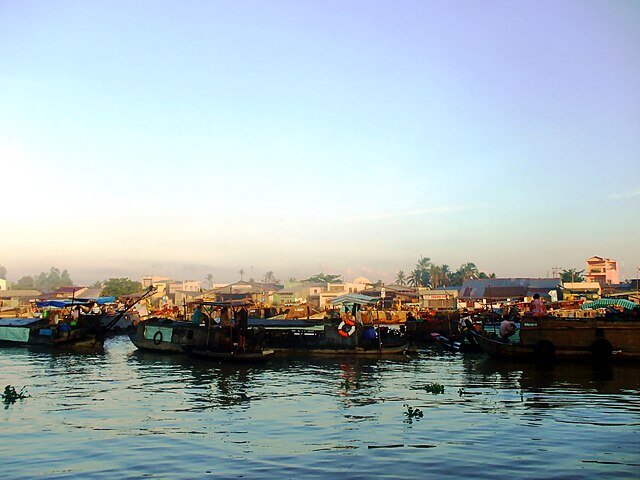
People respond to cameras differently depending on where you are, and understanding these differences means recognizing how tourism and modernization have reshaped visibility across the country. In Ho Chi Minh City’s District 1, where tourism normalized cameras years before 2024, visibility has become part of everyday performance. A raised camera often invites a peace sign or a quick glance at the LCD screen. The camera is treated as part of social media life, not an intrusion. In northern highland communities like Sapa or Mu Cang Chai, the reaction is slower and more guarded. Years of tour groups have turned craft and costume into commodities, and the Hmong or Red Dao assess intent quietly before consent appears, if it appears at all. In the Mekong Delta, the tone sits somewhere in between these extremes. Smiles and thumbs-up come easily during idle conversation on the water, but photography interrupts itself when work takes precedence, when nets need mending or fruit needs loading. Survival rhythms matter more than performance.
Geography shapes more than scenery; it creates distinct visual logics that demand different approaches to timing and subject matter. Hanoi’s neon scooter flow, dense and perpetually in motion, demands a different way of seeing than the misted terraces of the north, where harvest light settles gently in September and the pace allows for patience. The floating markets of the Delta move with the tide and the hour, reflections changing with planting seasons as the water shifts from brown to green. Since post-2024 tourism caps were implemented in highland regions, some ethnic festivals have become calmer and more accessible to patient observers willing to earn trust slowly. Cities, meanwhile, require anticipation and pre-visualization. Cleaner streets and electric vehicles remove some of the grit that once carried the image, leaving less margin for delay or second chances.
The Social Contract of the Lens
In Vietnam, the camera is rarely neutral. It enters a relationship shaped by Confucian ideas of hierarchy, the cultural preservation of face, and a strong sense of collective harmony that treats images as something shared, not something taken. Consent is negotiated socially, not declared formally through a binary yes or no. Age and status matter in ways that determine not just whether permission is granted but how it should be requested in the first place. A respectful greeting using proper honorifics—”Ông ơi” for an elder man, “Cô ơi” for an older woman—shifts the interaction immediately from transactional to relational. Small gestures count. A slight bow while holding the camera, not just pointing it. A genuine smile before the lens rises. The way attention is offered before extraction is attempted. Refusal is rarely verbal. A turned shoulder, averted gaze, or sudden busyness says enough. Ignoring those cues damages more than a moment; it disrupts the social balance that governs daily interactions.
Work carries particular weight in these exchanges, reflecting a culture that ties pride closely to industrious labor. Photographing someone mid-effort, struggling with a heavy load or visibly exhausted, can feel less like admiration of their strength and more like exposure of their vulnerability. In rural areas, women may decline photos not from camera shyness but because they don’t feel properly presented, a reflection of how face operates in daily life. Elders expect acknowledgment before attention, and skipping that step reads as poor upbringing, a violation of the moral order they anchor. Urban men playing chess or drinking coffee tend to be more relaxed subjects, but gender and modesty create different dynamics in rural settings where visibility itself becomes more complicated. These reactions aren’t rigid rules; they’re cultural signals that require awareness rather than assertion.
Bridges and Barriers
Sensitivity varies significantly by region, shaped by both traditional beliefs and the accumulated weight of tourism’s extractive patterns. Some northern minority communities still hold protective beliefs about images—ideas that cameras can steal souls or bring bad luck—while others have grown wary after years of transactional tourism that turned children into performers and traditional dress into props. In places that see heavy traffic, communities now actively resist photography-for-money, sometimes implementing fines for photographers who shoot without asking, an effort to protect cultural integrity from commodification. The Mekong Delta remains more open and socially fluid, with permission often arriving through laughter or an invitation to sit and share tea, but even there work comes first and interruption registers as intrusion. In urban tourist zones like Hanoi’s Train Street, photography can drift into performance art, with small purchases or tips quietly expected in exchange for posed shots, creating a dynamic where consent becomes transactional rather than relational.
Intermediaries matter in some places more than others, particularly in ethnic minority communities where trust operates through established social networks. A local guide isn’t just a translator but a cultural bridge, someone who frames intent and vouches for presence, explaining that images serve appreciation rather than exploitation. Without that context, a photographer can appear extractive rather than curious, a voyeur rather than a guest. Gear plays a role in these dynamics too. Large professional lenses with white barrels create distance and power imbalances, signaling wealth and separation, while smaller mirrorless systems help photographers blend into environments and reduce intimidation. The practice of showing someone their image immediately on the LCD screen—the digital gift—shifts the dynamic from taking to sharing, transforming extraction into exchange and building trust through reciprocity that aligns with local values.
The Grace of the Unseen
Practical realities shape behavior in ways that intersect with cultural awareness. Theft remains a concern in parts of Ho Chi Minh City, especially when cameras are visible and attention wanders in crowded alleys, prompting many expats to carry compact cameras under jackets or rely on phone cameras that blend into everyday Grab rides. In rural areas, physical risk fades once humility is established and locals witness respectful behavior. Heat, humidity, and monsoon rains are constant companions that quietly shape what gear survives the day, warping lenses without silica packs and demanding protective housings that turn equipment into something you adapt around rather than something you display. These considerations aren’t separate from the cultural dimension; they’re part of the same calculus that determines how visible, how vulnerable, and how intrusive a photographer becomes in any given environment.
Refusal, when it comes, is gentle and indirect, reflecting a culture that favors social ease over confrontation. A hand wave, a glance away, sudden busyness with a task that wasn’t urgent a moment before. None of it is personal, but foreigners often misread these soft signals as rejection and over-apologize or over-explain, when a simple “Cảm ơn nhé” and visible deletion of the image restores balance without drama. Sometimes the exchange continues later, through a shared screen or a printed photograph returned on a second visit, transforming a moment of refusal into a relationship built over time. Photography here works best when it functions as connection rather than capture, not because that’s what ethics demand from the outside, but because that’s how the culture holds and understands the act of image-making itself. Northern reserve yields to southern fluidity under these principles, but the underlying framework remains consistent across regions: the camera participates in social exchange, and the image belongs to the relationship, not just the person behind the lens.
In closing
I still don’t raise my camera quickly here. I pause. I watch who settles into a moment and who passes through it. The longer I stay, the less the rules feel like restrictions and the more they feel like guidance, nudging the lens away from control and toward patience. What I’ve learned isn’t how to photograph Vietnam, but how to wait for it. Most of the time, that’s enough.
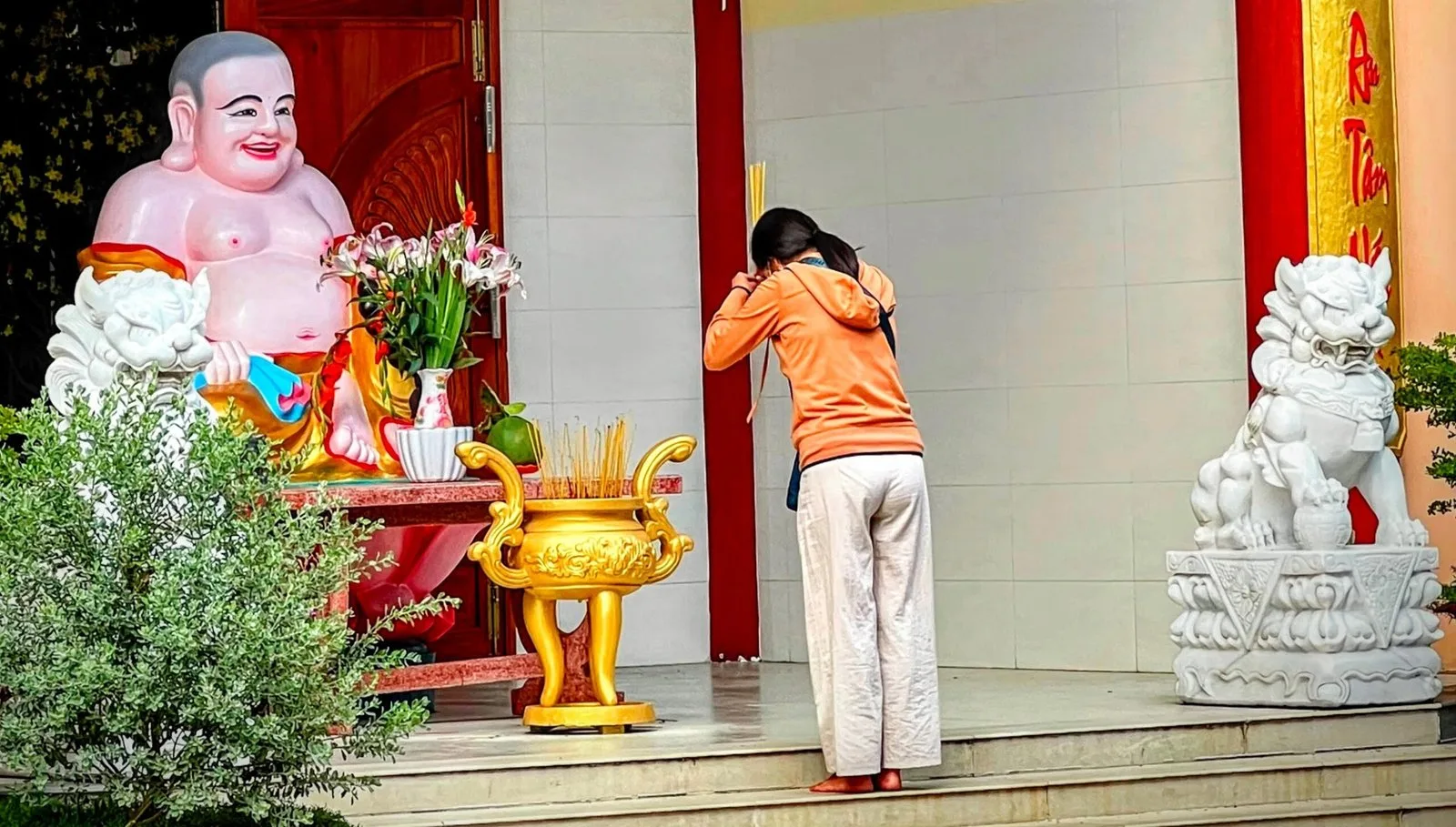
A Small Act of Faith