
Vietnam Is Not Your Budget Hack.
A man bragged about his Saigon apartment, then haggled fifty cents from an elderly street vendor. Nobody noticed the contradiction. Some things need saying about Vietnam.
EXPAT LIFE
Hein Lombard
3/23/20264 min read
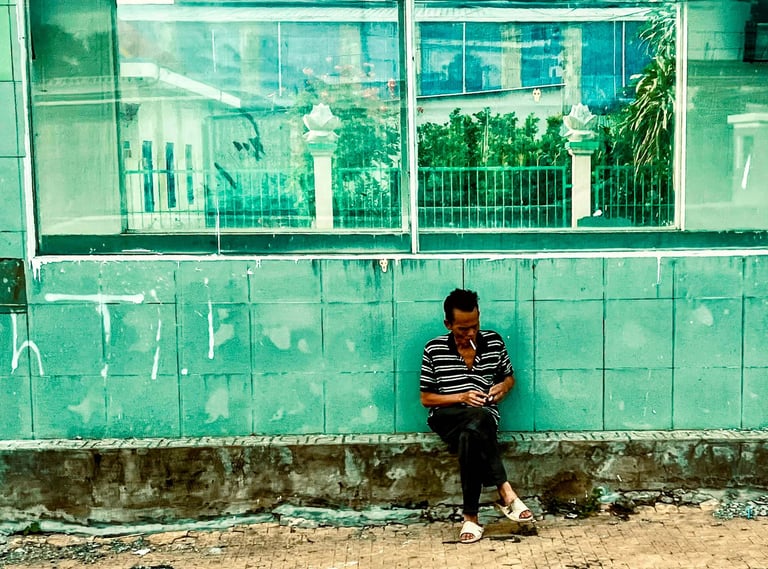
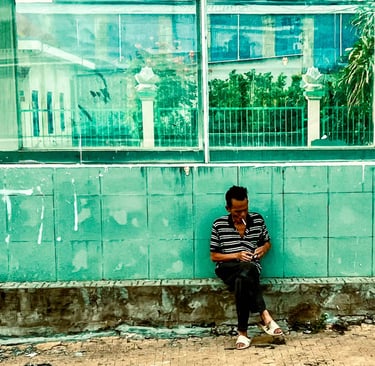
Midday, Saigon. Nobody's filming this.
Vietnam Is Not Your Budget Hack
He was proud of the apartment. Showed the camera every room, every balcony view, every detail that confirmed he'd made a smart life decision. Then, a few minutes later, he was haggling with an elderly street vendor over fifty cents. A conical hat. Handmade. The kind of thing that takes time and skill to produce, sold by someone who has been standing in the heat longer than he's been in the country.
He didn't seem to notice the contradiction. That's the part that stays with you.
The Pipeline
There is a content machine running at full speed right now, and its product is a specific version of Vietnam. Cheap apartments. Cheap food. Cheap coffee. A life of ease unlocked by the simple act of getting on a plane and arriving somewhere the cost of living hasn't caught up with Western salaries yet.
The videos are consistent. Someone walks through a furnished apartment, names a price that sounds impossibly low by London or Sydney standards, and watches the comments fill with people asking how they did it. Someone else films a meal that cost less than a dollar and frames it as a discovery. The algorithm rewards the content. More people arrive with the same expectations.
What the content doesn't show is the math from the other side of the table.
The average monthly salary in Vietnam is somewhere around seven to nine million dong. For a lot of people working in the provinces, it's less. The elderly woman selling conical hats is not operating with a margin. She's not haggling for sport. Fifty cents is fifty cents.
When a foreigner arrives, films her, and then negotiates the price down because they can, something has happened that the travel content genre doesn't have language for.
This Pattern Has Happened Before
Thailand spent years as the destination of choice for a particular kind of long-term traveler. Border runs became a lifestyle. Cheap apartments in Chiang Mai filled with people running remote businesses and congratulating themselves on their arbitrage. The content machine ran the same videos, with different street food and different sunsets.
Then a few things shifted. Visa rules tightened. Rental costs in popular neighborhoods climbed. The local sentiment toward a certain type of foreigner grew complicated. Thailand started closing doors that had been open for years, and the people who'd built their lives around those open doors started looking for the next place.
Vietnam appeared on the list.
The border run crowd doesn't disappear. It relocates. And it brings the same content, the same expectations, and the same arithmetic that treats local poverty as a personal financial opportunity.
What a Thousand Dollars Actually Gets You Now
Da Nang has become the specific city that gets named most often in the "move to Vietnam for cheap" content. It's photogenic. It has beaches. It has a growing expat infrastructure. And for a while, it was genuinely affordable.
Landlords noticed. Rental prices in the areas where foreigners tend to cluster have moved significantly in recent years, pushed upward by demand and by the very content that promoted the city as undiscovered and cheap. The discovery, once broadcast widely enough, undoes itself.
A thousand dollars a month in Da Nang is not the comfortable buffer the content suggests. After rent in a foreigner-friendly area, utilities, food, transport, health insurance if you're being responsible about it, and the occasional visa run or administrative cost, the margin is thin. Thinner than the videos make it look.
Arriving with a thousand dollars as a starting fund, rather than a monthly income, is a different situation again. That particular piece of advice, floated casually in comment sections and video descriptions, sets people up for a genuinely difficult first few months.
The Mood Is Shifting
This is harder to quantify, but it's real if you've been here long enough to notice it.
Vietnamese people are generous, patient, and genuinely welcoming in ways that visitors consistently underestimate. That hasn't changed. What has changed, in some places, is the specific patience extended toward foreigners who arrive visibly treating the country as a financial workaround.
It's not a monolithic shift. It's more subtle than that. A different quality of attention in certain neighborhoods. Comments that wouldn't have been made a few years ago. A quiet recalibration of who gets the benefit of the doubt.
This is not surprising. Watching people celebrate how little they pay for things, in a country where most people work long hours for wages that those same people would find unlivable, has a cumulative effect. Hospitality has limits. So does patience.
What Actually Lasts
Eight years in this country, most of them in a provincial city in the Mekong Delta rather than a beach destination or a digital nomad hub, has produced a different set of conclusions than the content suggests.
The people who build something sustainable here are generally not the ones who arrived optimizing for cheapness. They're the ones who learned enough Vietnamese to have a real conversation, who understood that the cost of living reflects local wages and not personal entitlement, who built relationships that weren't transactional, and who contributed something to the place rather than extracting from it.
Vietnam is a genuinely remarkable place to live. That's not the same as saying it's a backdrop for someone else's budget lifestyle content.
The elderly woman selling conical hats already knows the price of her work. She set it herself.
Hein Lombard has lived in Vietnam's Mekong Delta since 2018. He writes about expat life, slow travel, and teaching English at GoNomadNest.com.
© 2025. All rights reserved.
hello@gonomadnest.com