
Signs You're Ready to Live in Vietnam Long-Term Instead of Touring
By day five of a trip home to South Africa, I was already missing Vietnam. Not a dish or a view. Just the weight of a normal day in a place that had learned my name.
Hein Lombard
4/7/20264 min read
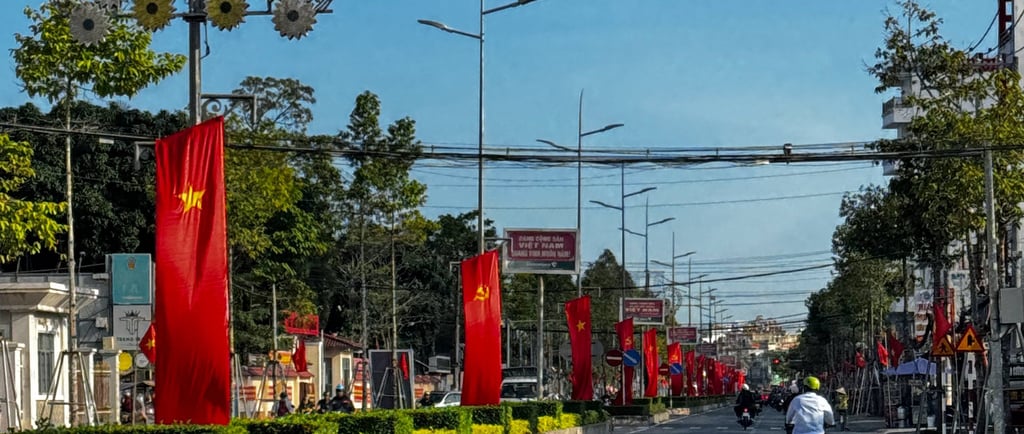
By day five of a twelve-day trip back to South Africa, something shifts. The weather is good. The food is familiar. My mother's cooking is exactly as I remembered it. We sit in the garden in the cool evening air and talk until the night sky fills in above the trees. There is genuinely nothing wrong with any of it.
And yet, somewhere in the background, quiet and inconvenient, I'm missing Vietnam.
Not a specific thing. Not a dish or a street or a view. Just the way I feel when I'm there. The weight of a normal day in Sóc Trăng. The particular texture of a life that has been lived in the same place long enough to leave marks.
That's when you know.
Most people who come to Vietnam for the first time plan their trip the same way. They open TikTok, search "top five Vietnam destinations," and build an itinerary from whatever appears. Which is reasonable. You have limited time, limited budget, and a finite number of days off work. You want to see the things worth seeing. Nobody can be faulted for that logic.
The problem isn't the planning. It's what the planning leaves out.
Sóc Trăng sits about ninety minutes from Cần Thơ, which makes it a manageable day trip for travelers using the bigger city as a base. Most of them come, see Bat Pagoda, walk around for a few hours, and leave. They've seen Sóc Trăng. It's been logged.
I understand this. I also think it's a little sad, though I hold that thought gently because I've been the person moving too fast through a place to actually feel it. The issue isn't that day-trippers are doing something wrong. It's that Sóc Trăng is a place that requires time to seep into you. A few hours doesn't give it the chance.
I've heard people say that if you've seen one small Vietnamese town, you've seen them all. And standing at a bus window, maybe that's partly true. A lot of these places do share a surface similarity: the same wide roads, the same shophouse architecture, the same motorbike density. From a distance, the pattern repeats.
Get out of the vehicle and every place feels different.
Home, for me, is wherever I've hung my hat long enough for life to accumulate around it. Not where I was born or where I hold a passport. Where the days have stacked up into something recognisable.
I didn't arrive in Sóc Trăng with a plan to stay. I arrived as agency property, four months of making myself useful and not causing problems, grateful enough just to have work. The town didn't mean much to me then beyond logistics. It was where the job was.
At some point, without announcing itself, that changed.
The change didn't come from a decision or a moment of clarity. It came from repetition. From buying durian from the same person enough times that she stopped treating the transaction as a transaction. From the lady at the bank who helps me every time and mentions, every time, that her son in kindergarten loves my class. From the air conditioner repairman I've been calling for four years, who arrives already knowing what the problem probably is. From the Shopee delivery driver who spotted me at the supermarket recently, called me by name, and kept walking like that was the most ordinary thing in the world.
It was. That's the point.
None of these moments are remarkable individually. Collectively they are the whole answer to the question in the title of this post. You're ready to live somewhere long-term when the place has started to know you back.
There's a version of the long-term expat story that gets told as a grand narrative. A leap of faith. A reinvention. A person who left everything behind and found themselves in Southeast Asia.
That's not quite how it goes, at least not in my experience.
It goes more like this: you stay longer than you planned, then longer again, and at some point the question of leaving stops feeling urgent and starts feeling abstract. You're on the ferry to somewhere you haven't been before and you're the only foreigner on board and the other passengers clock you once and then go back to their phones because you're not that interesting. That's not nothing. That's years of accumulated ordinariness doing its quiet work.
I'm still a foreigner here. That hasn't changed and won't. Vietnamese people meeting me for the first time will read me as a tourist because that's the most available frame, and it's not wrong exactly. But inside that frame I'm just a person who lives here, going somewhere I haven't been before, or heading back to a place I go regularly for rest, a medical checkup, paperwork. The same things everyone is doing on the ferry.
The signs that you're ready for this are less dramatic than most people expect. You stop photographing your food and start just eating it. You have a preferred stall and a usual order. You know which roads to avoid on market days. You've stopped converting prices into your home currency. You have a friend, a real one, who has nothing to do with your job, who will sit with you through a long and circling conversation and still be there at the end of it.
You go home for twelve days and by day five you're already halfway back.
None of this requires Sóc Trăng specifically. The Mekong Delta has towns that will do this to you if you let them. The thing they all need is time, more than a day trip allows, more than a week allows if you spend it moving. The travelers who get closest to understanding a place like this are the ones who stop somewhere unremarkable, stay longer than planned, and let the ordinary days do the work.
The top five lists will still be there when you get back.
If you're thinking about making Vietnam more than a trip, particularly if you're past forty and wondering whether the logistics are actually manageable, the guide I wrote covers the parts nobody else wants to talk about. It's called Go Anyway.
© 2025. All rights reserved.
hello@gonomadnest.com